A technical comparison of pumping technologies for viscous, shear-sensitive, abrasive and solids-laden fluids
When selecting a pump for an industrial process, the question should not simply be“Which pump is best?”
The right question is:
“Which pumping technology is best suited to my fluid and my process conditions?”
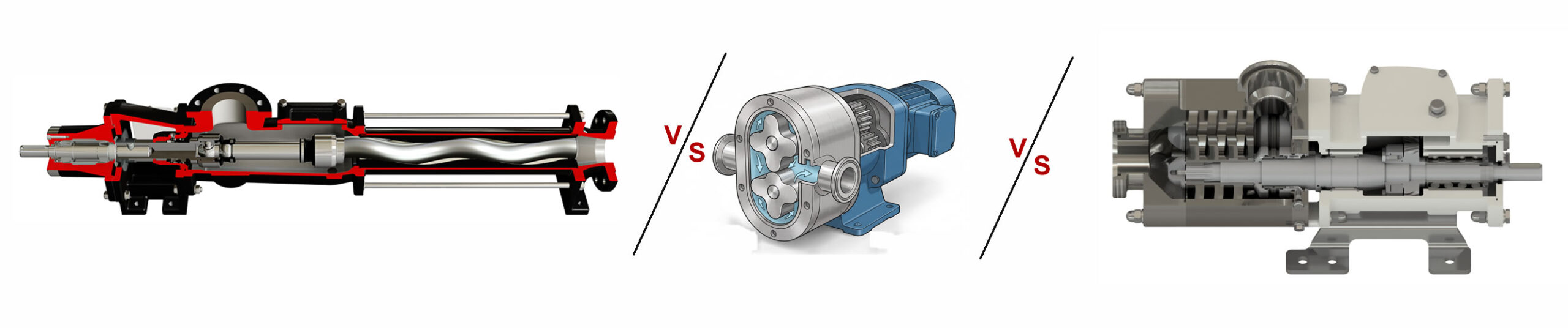
Rotary lobe pumps, progressing cavity pumps and twin screw pumps are all positive displacement solutions, but they differ in design and performance.
Viscosity, pressure, temperature, solids content, abrasiveness, fibers, shear sensitivity, hygienic requirements and cleaning needs are some of the parameters that drive the selection.
In this guide we compare the three technologies in a technical and impartial way, highlighting the advantages and limitations of each.
Rotary lobe vs progressing cavity vs twin screw pump
Rotary lobe vs progressing cavity vs twin screw pump
| Feature | Rotary lobe pump | Progressing cavity pump | Twin screw pump |
|---|---|---|---|
| Low-viscosity fluids | 🟢 Very good | 🟢 Good | 🟢 Very good |
| Viscous fluids | 🟢 Good | 🟢 Excellent | 🟢 Excellent |
| Highly viscous fluids | 🟡 Case by case | 🟢 Excellent | 🟢 Excellent |
| Fluids with solids | 🟢 Good | 🟢 Excellent | 🟢 Very good |
| Fibers and fibrous products | 🟢 Good | 🟢 Excellent | 🟢 Good |
| Abrasive fluids | 🟡 Case by case | 🟢 Very good | 🟢 Good |
| Shear-sensitive products | 🟢 Very good | 🟢 Very good | 🟢 Excellent |
| Low pulsation | 🟢 Good | 🟢Very low | 🟢 Extremely low |
| Suction capability | 🟢 Good | 🟢 Excellent | 🟢 Excellent |
| Metering via speed control | 🟢 Good | 🟢 Excellent | 🟢 Excellent |
| Food applications | 🟢 Excellent | 🟢 Very good | 🟢 Excellent |
| Pharmaceutical applications | 🟢 Excellent | 🟡 Configuration-dependent | 🟢 Excellent |
| CIP | 🟢 Excellent in dedicated versions | 🟡 Configuration-dependent | 🟢 Excellent in dedicated versions |
| Variable process conditions | 🟢 Good | 🟢 Very good | 🟢 Excellent |
| Difficult fluids | 🟢 Good | 🟢 Excellent | 🟢 Excellent |
| Process complexity | 🟡 Low/medium | 🟢 Medium | 🟢 Medium |
| Typical applications | Food, cosmetics, pharmaceutical | Industrial, environmental, food, chemical | Food, pharmaceutical, chemical, industrial |
Note: this comparison is indicative. Actual performance depends on pump configuration, materials, rotational speed and the specific properties of the fluid.
| Product | Rotary lobe pump | Progressing cavity pump | Twin screw pump |
|---|---|---|---|
| Milk | 🟢 | 🟢 | 🟢 |
| Cream | 🟢 | 🟢 | 🟢 |
| Yogurt | 🟢 | 🟢 | 🟢 |
| Creams and custards | 🟢 | 🟢 | 🟢 |
| Gels | 🟢 | 🟢 | 🟢 |
| Sauces | 🟢 | 🟢 | 🟢 |
| Purées | 🟢 | 🟢 | 🟢 |
| Concentrates | 🟢 | 🟢 | 🟢 |
| Jams | 🟢 | 🟢 | 🟢 |
| Products with particulates | 🟢 | 🟢 | 🟢 Excellent |
| Fibrous products | 🟢 | 🟢 | 🟢 Excellent |
| Sludge | 🟡 | 🟢 Excellent | 🟡 |
| Abrasive fluids | 🟡 | 🟢 Excellent | 🟢 |
| High-viscosity fluids | 🟡 | 🟢 Excellent | 🟢 Excellent |
| Oils and fats | 🟢 | 🟢 | 🟢 |
| Chemicals | 🟢 | 🟢 | 🟢 |
| Detergents | 🟢 | 🟢 | 🟢 |
| Cosmetic products | 🟢 | 🟢 | 🟢 Excellent |
| Pharmaceutical products | 🟢 | 🟡 | 🟢 Excellent |
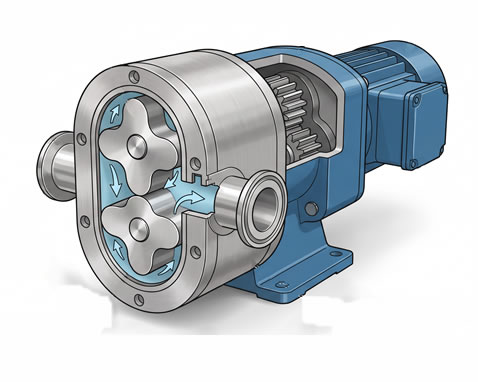
Rotary lobe pump: when is it the right choice?
The rotary lobe pump is a well-established technology, particularly in the food, pharmaceutical and cosmetics industries and in hygienic applications in general.
Its operating principle allows relatively gentle product transfer, an important feature when the fluid must not be exposed to excessive mechanical stress.
Advantages
- Gentle product handling
- Excellent solution for hygienic applications
- Good handling of viscous products
- Can transfer products containing particulates
- Widely used in the food industry
- Designs engineered for cleaning and sanitization
What to consider
As viscosity, pressure, abrasiveness or solids content increase, the pump configuration must be carefully verified.
Particle size and nature, suction conditions and rotational speed can significantly affect performance.
When to consider it:when the process mainly requires gentle transfer, hygiene and a proven technology.
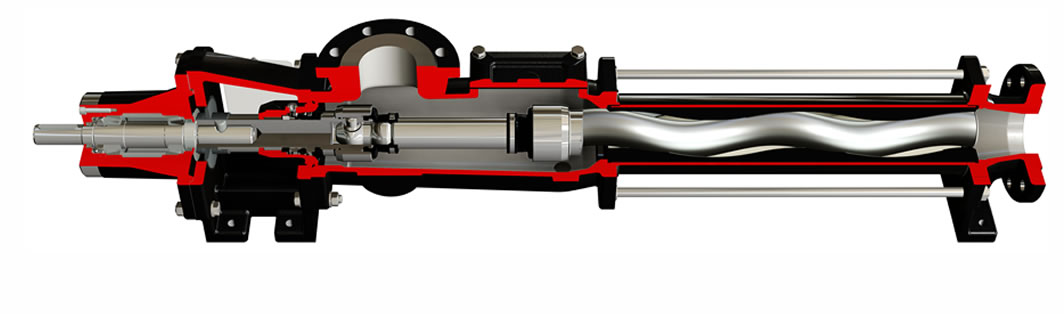
Progressing cavity pump: when is it the right choice?
The progressing cavity pump, also known as a single screw pump, is especially valued when the fluid becomes difficult to handle.
High viscosity, solids, fibers, abrasiveness and variable process conditions are all situations in which this technology can offer major advantages.
Its operating principle creates a series of progressing cavities that convey the product from the suction port to the discharge.
Advantages
- High capability with viscous fluids
- Excellent solution for solids-laden fluids
- Suitable for fibrous products
- Good handling of abrasive fluids with the correct configuration
- Smooth, steady flow
- Excellent suction capability
- Flow rate control via speed
- Also suitable for metering applications
- Extensive customization of materials and configurations
What to consider
In a progressing cavity pump, the stator is a key component.
The elastomer must be selected based on temperature, chemical compatibility, abrasiveness and fluid properties.
Dry running must also be carefully avoided or managed with suitable protection systems.
When to consider it:when the fluid is viscous, abrasive, fibrous, contains solids or has properties that are challenging for other technologies.
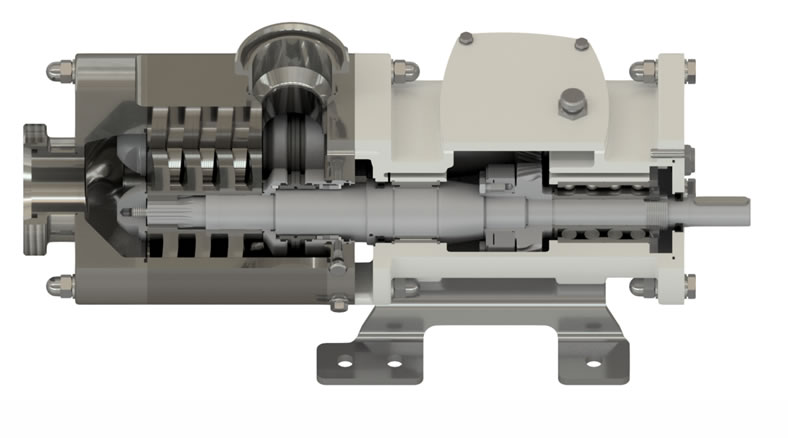
Twin screw pump: when is it the right choice?
The twin screw pump is a particularly attractive solution when you need to combine flexibility, low pulsation, strong suction capability and the ability to handle a wide range of fluids.
The two screws rotate in sync, forming pumping chambers that convey the product continuously.
One of its most valuable features is the ability to use the same pump under different operating conditions, where the design and configuration allow it.
Advantages
- Extremely smooth flow
- Low pulsation
- Excellent suction capability
- Wide viscosity range
- Good handling of products containing particulates
- Gentle product handling
- High process flexibility
- Suitable for hygienic applications
- CIP-ready in dedicated configurations
- Handles different operating conditions with the same machine
What to consider
The twin screw pump is a sophisticated technology and must be correctly sized.
Screw geometry, speed, materials and seals must be selected according to the fluid and the process.
When to consider it:when the application simultaneously requires high flexibility, low pulsation, good suction capability and demanding hygienic or process requirements.
Progressing cavity or twin screw?
This is often the real decision when process conditions are particularly demanding.
| Requirement | Rotary lobe | Progressing cavity | Twin screw |
|---|---|---|---|
| High viscosity | ⭐⭐ | ⭐⭐⭐⭐⭐ | ⭐⭐⭐⭐⭐ |
| Fluids with solids | ⭐⭐⭐ | ⭐⭐⭐⭐⭐ | ⭐⭐⭐⭐ |
| Abrasive fluids | ⭐⭐ | ⭐⭐⭐⭐⭐ | ⭐⭐⭐⭐ |
| Fibrous fluids | ⭐⭐⭐ | ⭐⭐⭐⭐⭐ | ⭐⭐⭐ |
| Metering | ⭐⭐⭐ | ⭐⭐⭐⭐⭐ | ⭐⭐⭐⭐ |
| Low pulsation | ⭐⭐⭐ | ⭐⭐⭐⭐ | ⭐⭐⭐⭐⭐ |
| Suction | ⭐⭐⭐ | ⭐⭐⭐⭐⭐ | ⭐⭐⭐⭐⭐ |
| Hygienic applications | ⭐⭐⭐⭐⭐ | ⭐⭐⭐ | ⭐⭐⭐⭐⭐ |
| CIP | ⭐⭐⭐⭐⭐ | ⭐⭐⭐⭐ | ⭐⭐⭐⭐⭐ |
| Process flexibility | ⭐⭐⭐ | ⭐⭐⭐⭐ | ⭐⭐⭐⭐⭐ |
| Shear-sensitive products | ⭐⭐⭐⭐ | ⭐⭐⭐⭐ | ⭐⭐⭐⭐⭐ |
In short
Aprogressing cavity pumpcan be especially advantageous when the fluid is difficult: viscous, abrasive, fibrous or high in solids.
Atwin screw pumpcan be especially advantageous when the process requires flexibility, low pulsation, high suction performance and demanding hygienic standards.
There is no single best technology
It is important not to base the decision on pump type alone.
A rotary lobe pump may be the best solution for one process.
A progressing cavity pump may be better suited to another.
A twin screw pump can offer significant advantages in applications that require several characteristics at once.
The right choice comes from analyzingfluid + process + operating conditions.
How to choose the right pump
Before sizing a pump, you need to know at least the following:
Fluid properties
- Viscosity
- Density
- Temperature
- Presence of solids
- Particle size
- Solids content (%)
- Abrasiveness
- Presence of fibers
- Shear sensitivity
- Chemical compatibility
System data
- Required flow rate
- Discharge pressure
- Suction lift
- Pipe length
- Pipe diameter
- Number and type of bends
- Process temperature
- Suction conditions
- Start/stop frequency
Process requirements
- CIP
- SIP
- Sanitary requirements
- Metering
- Flow rate control
- Continuous or intermittent duty
- Reversible flow
The right technology is the one that solves your process challenge
Nova Rotors develops pumping solutions based primarily on progressing cavity and twin screw technology, for industrial, food, chemical and environmental applications and for high-viscosity fluids.
This does not mean that rotary lobe pumps lack their own field of application.
It means that every technology must be assessed on what it can actually deliver.
That is why a technical comparison of different technologies is the best starting point for an informed decision.
Have a fluid that’s hard to pump?
Share your product and system data with our engineers.
We’ll help you identify the technology and configuration best suited to your application.
Request a technical assessment
(Flow rate, pressure, viscosity, temperature and fluid properties are enough to get the assessment started.)
Discover the Nova Rotors industrial Diamond Series progressing cavity pumps
Discover the Nova Rotors food and chemical sector Diamond Series progressing cavity pumps
Discover the Nova Rotors HTS Raptor Series twin screw pumps
Scoprila gamma di pompe Monovite Nova Rotors Diamond series
Scoprila gamma di pompe Doppia Vite Nova Rotors HTS Raptor series